
ADAS Sensor Calibration Explained: Radars & More
10/12/2025 · Auto Glass With Class
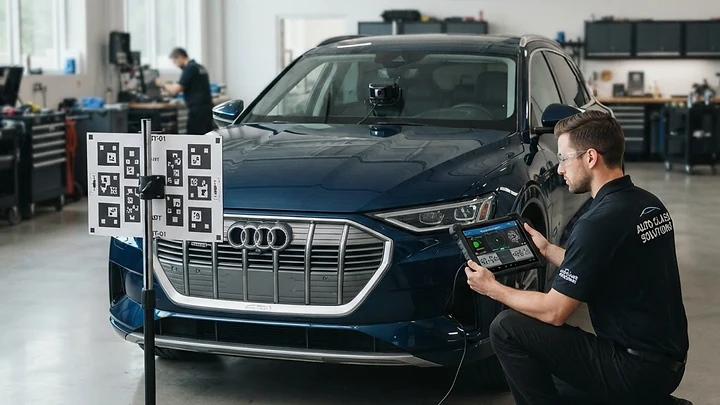
ADAS sensor calibration is the precise process of aligning and adjusting a vehicle's sensors—such as radars, ultrasonics, and LiDAR—to ensure they provide accurate data to advanced driver assistance systems (ADAS) like automatic emergency braking, blind-spot detection, and parking assist.
# ADAS Sensor Calibration Explained: Radars & More ADAS sensor calibration is the careful process of setting up a vehicle's sensors — such as radars, ultrasonics, and LiDAR — so they provide accurate information to advanced driver assistance systems (ADAS), such as automatic emergency braking, blind-spot detection, and parking assist. These sensors are the eyes and ears of modern vehicles, detecting obstacles, lane markings, and other road elements to enhance safety. At Auto Glass With Class, we perform expert ADAS sensor calibration using OEM-approved tools, particularly after repairs like windshield replacements that can disrupt sensor positioning. Calibration is not just a technical necessity; it's a safety imperative, as misaligned sensors can reduce system effectiveness by up to 50% in collision avoidance scenarios. ## Radar Sensors Radar sensors, often mounted on the front grille or bumper, use radio waves to detect objects at distances up to 200 meters, powering features like adaptive cruise control and forward collision warnings. ADAS sensor calibration for radars is crucial after bumper repairs or alignments, as even a 1-degree offset can cause false alerts or missed detections. The process usually involves dynamic calibration on the road or static setups with reflective targets. ## Ultrasonic Sensors Ultrasonic sensors, typically embedded in bumpers, emit sound waves to measure short-range distances (up to 5 meters), enabling parking assist, blind-spot monitoring, and low-speed maneuvering aids. ADAS sensor calibration for ultrasonics is usually performed after replacing or painting bumpers, using tools like target mats to verify detection distances and angles per OEM specs. ## LiDAR Sensors LiDAR (Light Detection and Ranging) sensors use laser pulses to create 3D maps of the surroundings, enabling advanced features such as autonomous emergency braking and pedestrian detection in high-end vehicles. ADAS LiDAR sensor calibration focuses on intrinsic adjustments, such as time offsets and beam alignment, often performed after roof or sensor module repairs. In summary, ADAS sensor calibration for radars, ultrasonics, and LiDAR maintains vehicle safety by restoring precise functionality after repairs. Choose certified services like ours to avoid risks on Arizona roads.
